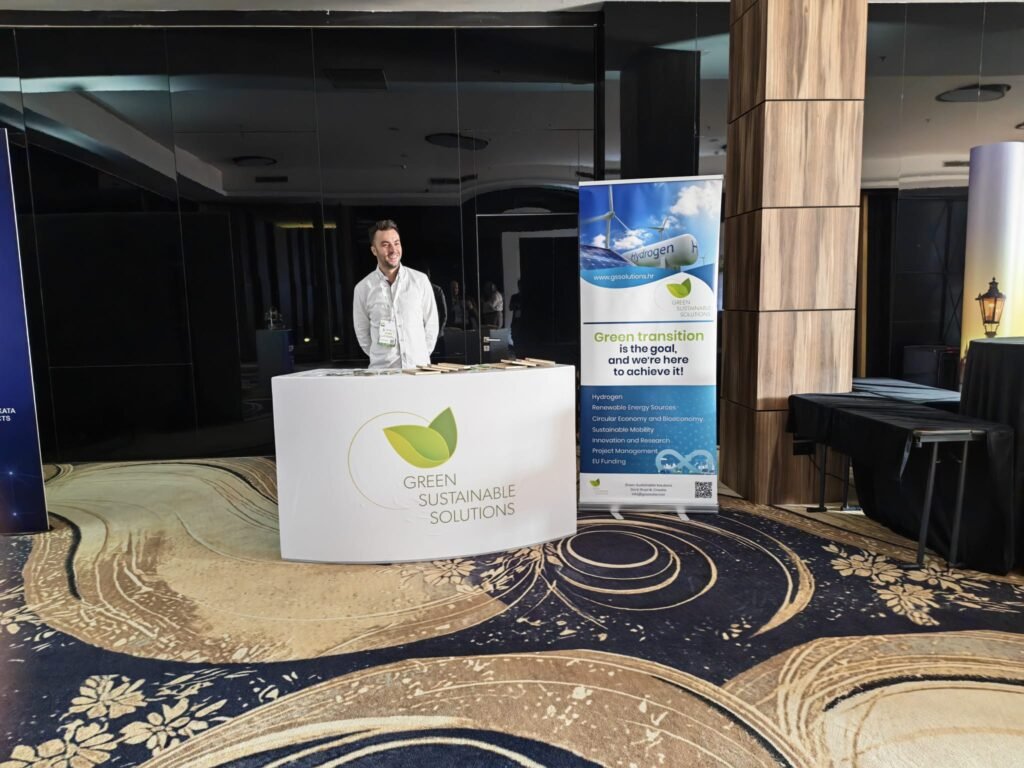
Participation in Sarajevo Energy & Climate Week 2026 provides Green Sustainable Solutions with an opportunity to look beyond individual technologies and projects and focus on a broader question: how can Southeast Europe accelerate the transition by working more effectively as a region?
For GSS, this regional perspective is particularly important. Croatia, Bosnia and Herzegovina and neighbouring markets face many comparable challenges in energy, infrastructure, industrial transition and access to investment, while at the same time offering different capabilities, resources and development opportunities.
The potential therefore lies not only in developing individual national projects, but in connecting organisations, expertise and investment needs across borders.
One of the key opportunities for Southeast Europe is to move from individual project ideas towards stronger pipelines of mature, investable and replicable initiatives.
This requires cooperation between technology providers, industry, municipalities, utilities, research organisations, investors and project developers from an early stage. It also requires projects to be designed with implementation in mind: clear end users, realistic business models, appropriate financing structures and partners capable of delivering results. GSS sees an important role in connecting these elements.
Through its work across European funding programmes and regional partnerships, GSS aims to bridge the gap between local needs and European opportunities by bringing together organisations that might otherwise operate within separate national or sectoral networks.
Moreover, the region should not be viewed only as a place where European technologies and projects are implemented.
Southeast Europe has the industrial capabilities, technical expertise, infrastructure needs and market potential to actively shape new solutions and participate in European value chains.
This is particularly relevant as the European energy transition increasingly moves from strategies and demonstration projects towards deployment, commercialisation and replication.
Regional cooperation can help organisations achieve the scale required to participate in that transition – combining pilot locations, industrial partners, public-sector stakeholders and technical expertise across several countries within a common project framework.
Therefore, GSS will continue strengthening its position as a link between Southeast European stakeholders and wider European innovation and funding ecosystems.
The focus is on translating regional challenges into structured project opportunities, connecting complementary partners and developing initiatives capable of moving from concept to implementation.
SECW 2026 is an important part of that process: not simply as an event to attend, but as a place to identify where regional cooperation can create the greatest added value.